Evolution of Peptide Drugs
What is a peptide?
Peptides are compounds with 2 to 50 amino acids linked together by peptide (amide) bonds. Peptides with 50 or more amino acids are defined as proteins. When proteins are degraded by in vivo reactions such as digestion and become less than 50 amino acids, they are again called peptides.
Peptides: two to 50 amino acids linked together

A wide variety of peptides are produced in different parts of the body, and have been identified as essential
hormones
and transmitters for the maintenance of the body (e.g., relaxation of muscles, dilation of blood vessels,
secretion of
gastric acid, control of autonomic nerves).
As for “peptide drugs”, in the 1980s, insulin was manufactured from Escherichia coli or yeast using
recombinant
technology and began to be used for the treatment of diabetes. Since then, peptide drugs have been approved
and used for
the treatment of other indications such as heart failure and prostate cancer.
Small molecule drugs and antibody drugs
On the other hand, "small molecule drugs" derived from alkaloids extracted from plants with molecular weight
of 500 or
less were used since the 19th century and in 1899, Aspirin, an anti-inflammatory analgesic drug that continues
to be
used at present, was commercialized.. Since then, many small molecules have been discovered and developed as
drugs.
Small molecule drugs once accounted for nearly 90% of the total pharmaceutical market and currently still
account for
approximately 50% of the market.
In the 1980s, technological innovation for antibody drugs rapidly took place. In the 1990s, several
blockbuster drugs
(e.g., Remicade, Herceptin, Rituxan) were launched and expanded the pharmaceutical market. In the 2020s,
antibody drugs
have grown to account for above 20% of the total pharmaceutical market .
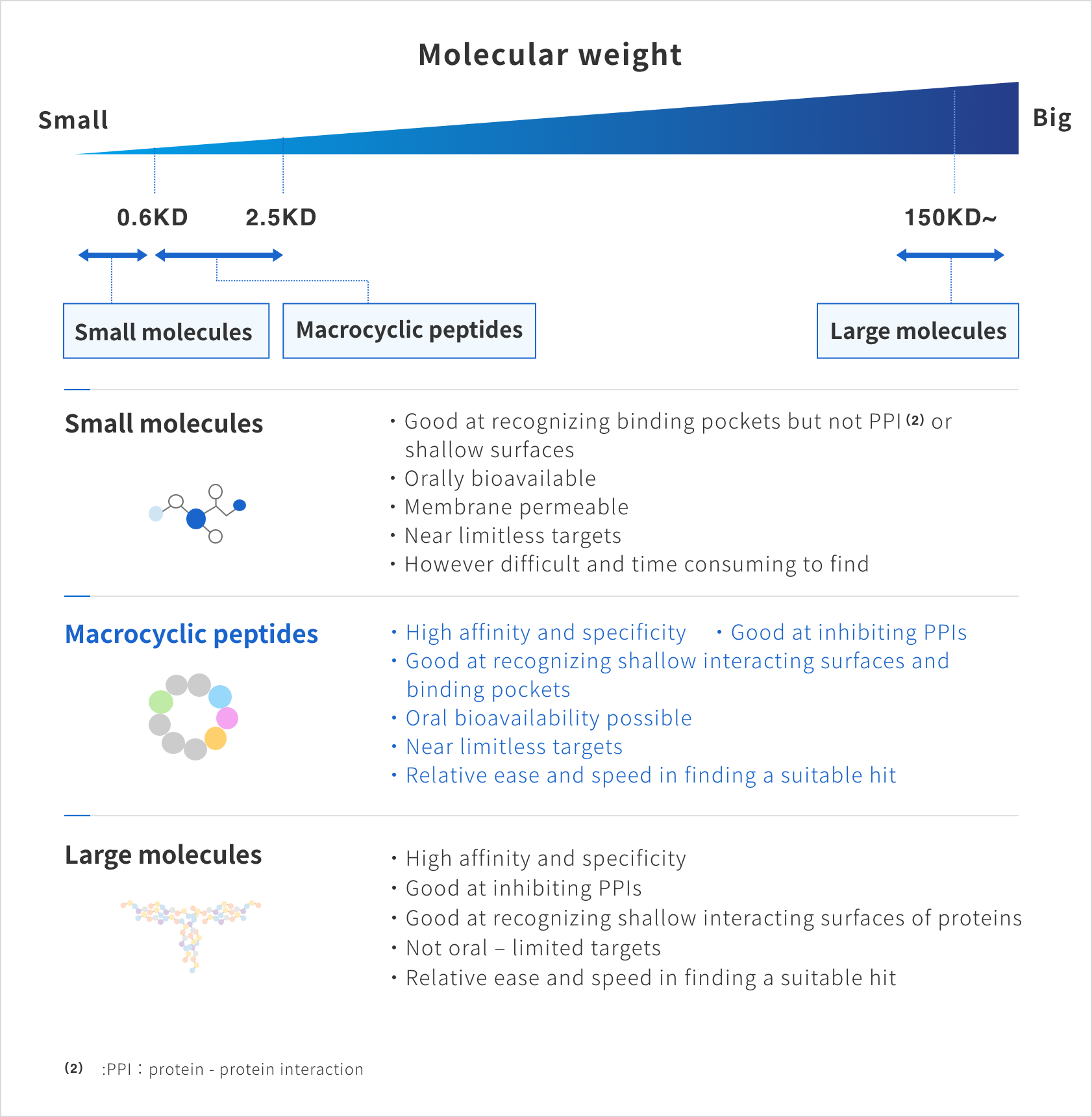
Small molecule drugs and antibody drugs remarkably differ in many aspects such asactivity, specificity, pharmacokinetics, penetration of the blood-brain barrier (BBB), oral bioavailability, access to intracellular targets and manufacturing cost. These drugs are developed in disease areas using their respective advantages. Since 2000, many peptide and nucleic acid-based drugs with molecular weights larger than small molecules and smaller than antibodies defined as “mid-sized molecule drugs" have been commercialized, and are believed to have a central role in next-generation drug discovery.
Characterization of macrocyclic peptides
In situations where traditional peptide drugs bind to the same target as small molecules and antibodies,
typically,
peptides may have similar activity and specificity compared to the other two modalities, but have weaknesses
such as in
pharmacokinetics or oral bioavailability.
On the other hand, if we can create peptides that can overcome the numerous weaknesses of traditional peptide
drugs, we
will be able to discover drugs to targets that cannot be targeted by small-molecule drugs. In addition, we
will be able
to develop orally administered drugs that can not be achieved by antibody drugs through the development of
smaller
peptide drugs that can only be targeted by antibody drugs.
PeptiDream is focusing on the discovery and development of "macrocyclic peptides" as next-generation peptide
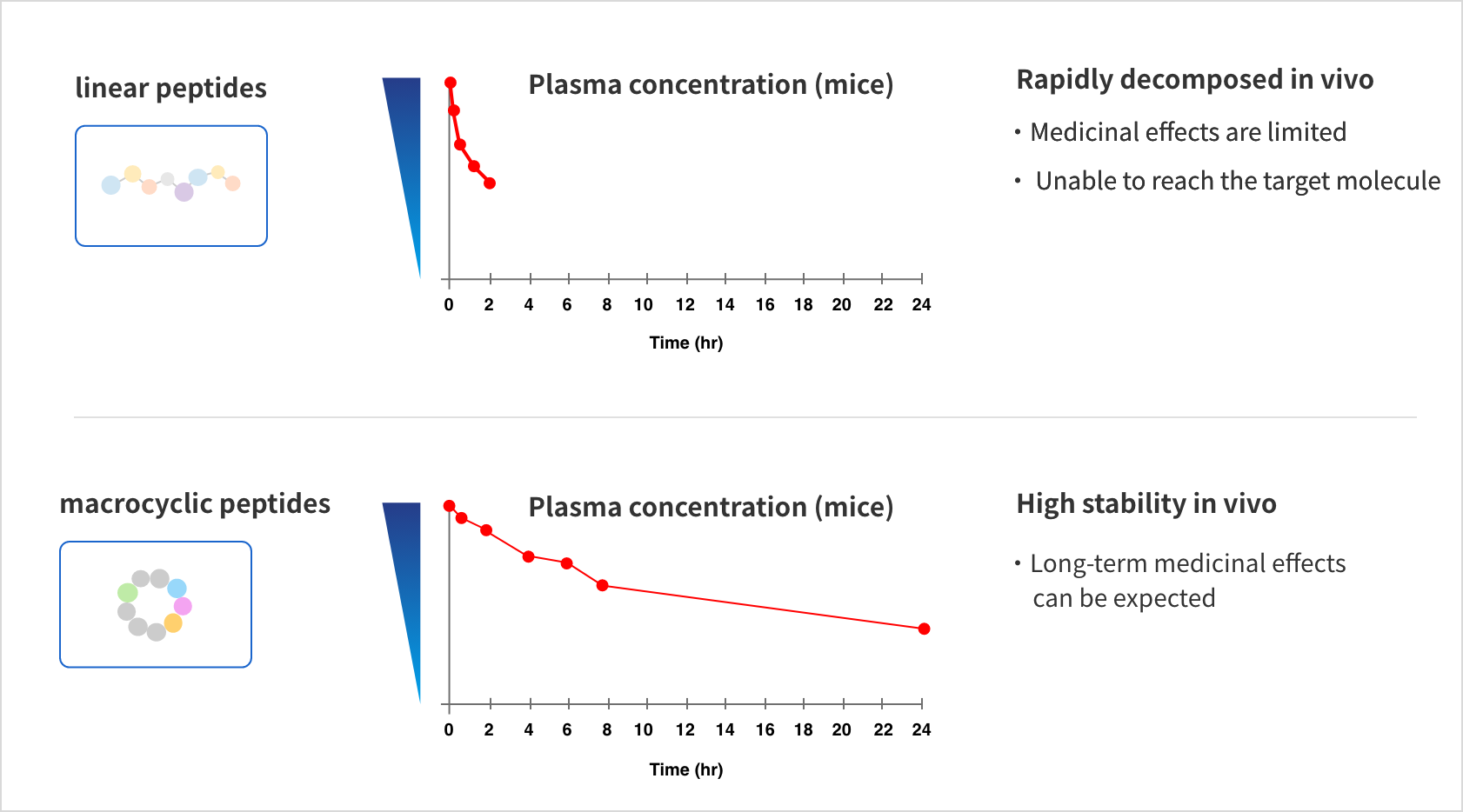
therapeutics. In general, macrocyclic peptides consisting of a ring of amino acids within 20 residues have
been found to
exhibit superior pharmacokinetics with significantly greater in vivo stability as well as improved activity
and
specificity due to reduced structural flexibility compared to linear peptides containing the same residues.
Furthermore,
the incorporation of “non-natural amino acids” in addition to the 20 natural amino acids, which include optical
isomers or
derivatives with side-chain modifications, enables us to tailor all physical properties required in
pharmaceutical R&D.
PeptiDream's proprietary drug discovery platform system: PDPS (Peptide Discovery Platform System) ( Drug Discovery and Development Platform System (PDPS)), enables us to produce a highly diverse library of macrocyclic peptides (over 10 trillion) based on over 3,000 non-natural amino acids which we have access to. As a consequence, it is possible to find hit compounds with high affinity and specificity with very high hit rate (95% or more). PDPS is also efficient in the optimization of hit compounds to clinical candidates, which will be required in later drug discovery efforts.
Positive futures of macrocyclic peptides
In the past 20 years, more than 20 macrocyclic peptide drugs have been marketed, but their therapeutic areas are mainly endocrine disorders, cardiovascular diseases and antibiotics and derived from natural macrocyclic peptides (e.g, human hormones and fungus, animal or plant derived-natural products). PeptiDream can discover novel peptide drugs without the need for natural peptides as a starting point, and this will greatly expand the potential for peptide drug discovery.
